
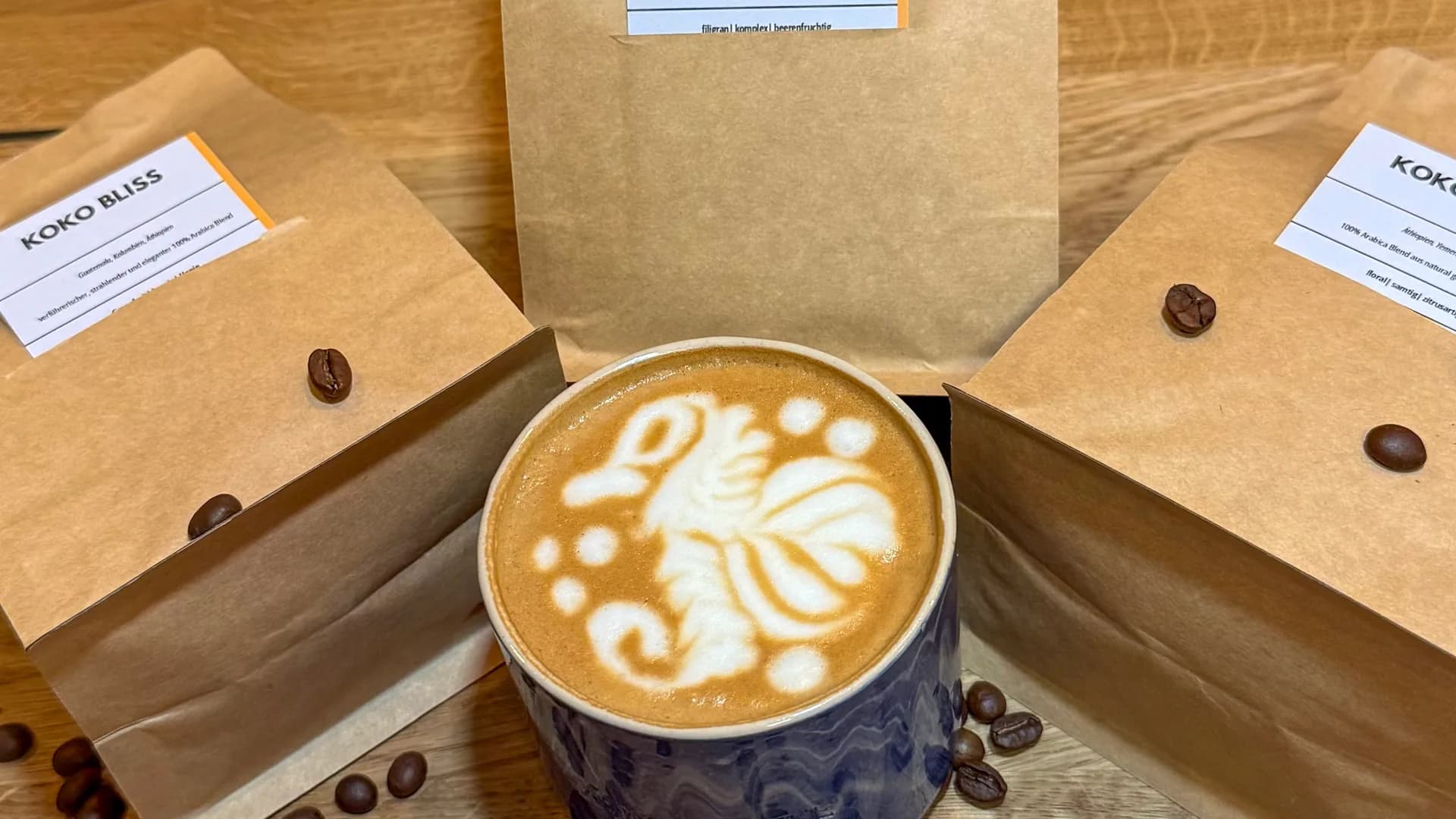
Floral notes, bergamot, clean acidity: coffee from Yirgacheffe is a classic in the specialty world. We explain why.
If specialty coffee has a country of origin with mythical status, it's Ethiopia – and within Ethiopia, Yirgacheffe is the region against which all others are measured. The fruitiest, most floral, most precise coffees in the world come from here.
Where exactly is Yirgacheffe?
Yirgacheffe is located in southern Ethiopia, in the Sidamo Zone, at 1,700 to 2,200 meters elevation. The soil is volcanic and nutrient-rich, the climate cool and humid. This exact combination produces coffees with high density, clean acidity, and complex aromas.
Heirloom – the genetic distinction
Unlike South America, where single cultivated varieties often dominate, Ethiopia is home to genetic diversity known as heirloom. Hundreds, likely thousands of wild varieties – many still unclassified – shape the aroma. That's why no Yirgacheffe tastes like another.
Washed vs. Natural – process makes the difference
Washed
The cherry is pulped immediately after harvest, the bean ferments in a water bath and is then dried. Result: clarity, transparency, acidity-focused. Citrus, bergamot, tea-like.
Natural
The entire cherry dries around the bean. Sugar and aromas from the fruit migrate into the seed. Result: sweetness, berry notes, full body. Blueberry, strawberry, cocoa.
KOKO BLISS – with Yirgacheffe content
Ethiopia (Yirgacheffe) + Colombia
Why specialty coffee from Yirgacheffe is so expensive
Harvesting is done exclusively by hand. Only ripe cherries are picked, often in multiple passes over weeks. The small gardens rarely produce more than 2 hectares, the paths to the washing stations are long, and raw coffee prices are volatile. All of this is reflected in the final price – and is also why Direct Trade and fair payment are particularly important in this region.
How to brew Yirgacheffe at home
Yirgacheffe is predestined for filter brewing: Pour Over, Chemex, AeroPress. The delicate flavors often don't shine in espresso extraction because the short brew time doesn't allow enough time for them to develop. Grind medium-fine, water at 94–96 °C, ratio 1:16.
